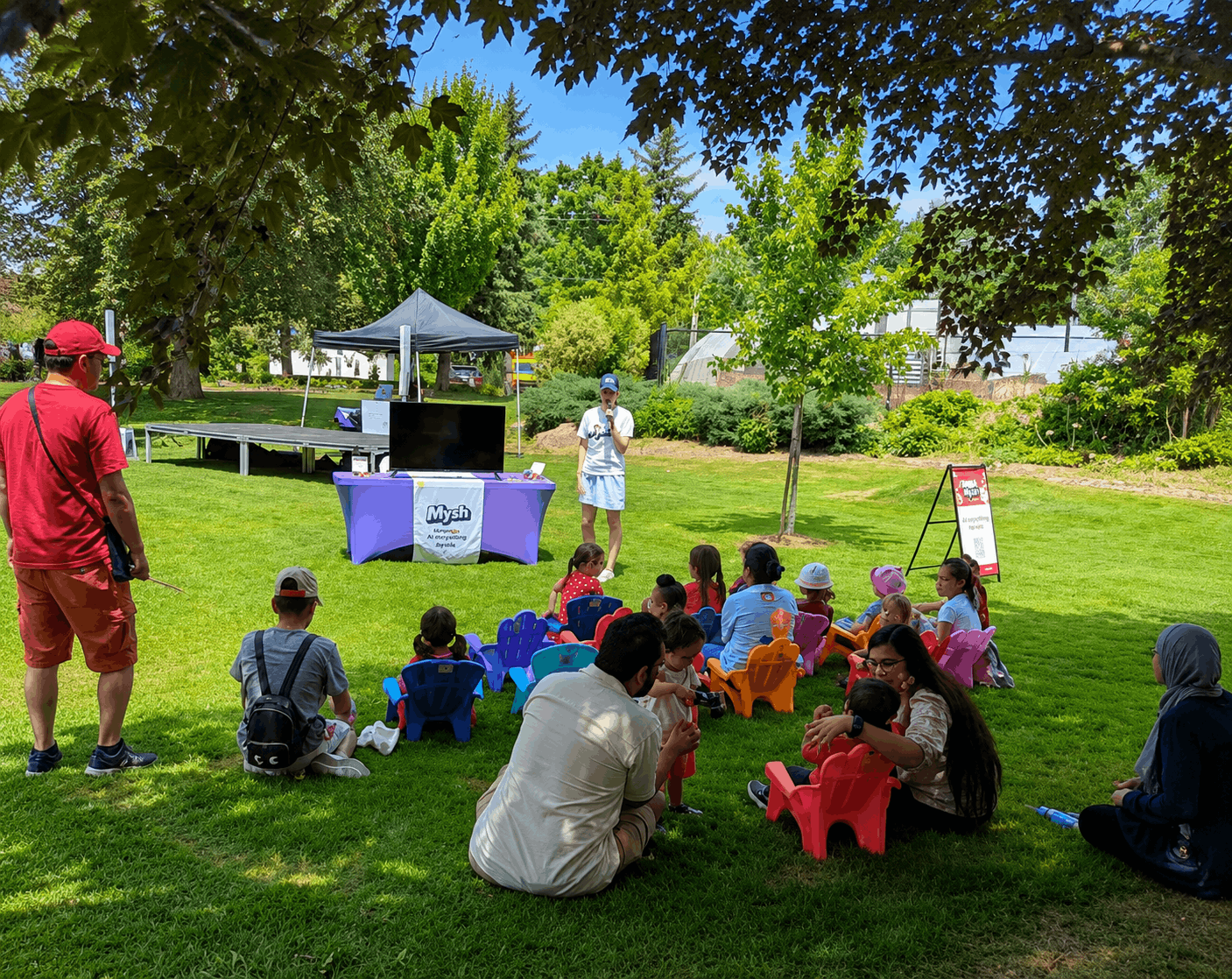
Some events you plan down to the minute. Others plan themselves around you. This year's Canada Day in Cambridge was firmly the second kind, and it turned out to be one of the best afternoons we've had all summer.
We rolled in to a celebration already in full swing: families spread across the grass, food lines forming, kids darting between activities with the particular energy of a day off school, and a sun that meant business. The thermometer crept toward 40°C, the kind of heat that makes you rethink every plan you showed up with. So we rethought ours.
A stage on the move
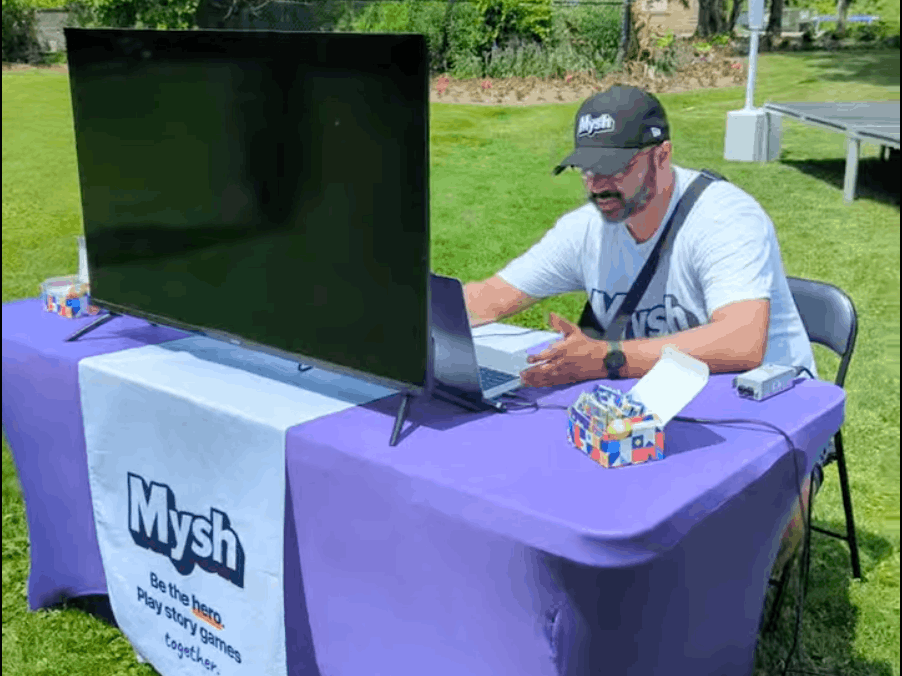
Here's something they don't tell you about bringing a live storytelling show to an outdoor festival: half the job is logistics, and the other half is reading the room — or, in this case, reading the sky.
Lauren took one look at our stage baking in the open and made the call of the day: she moved the whole thing — big speakers, mic, and setup — into the shade of a tree nearby. It sounds simple. It was not. Anyone who has hauled festival gear across a lawn in near-40-degree heat knows exactly how not-simple it is. But it meant the kids who gathered around us spent the next hour in the cool instead of the glare, and that patch of shade quietly became part of the show, our own little storytelling grove for the afternoon.
How Canada Tree got his branch arms
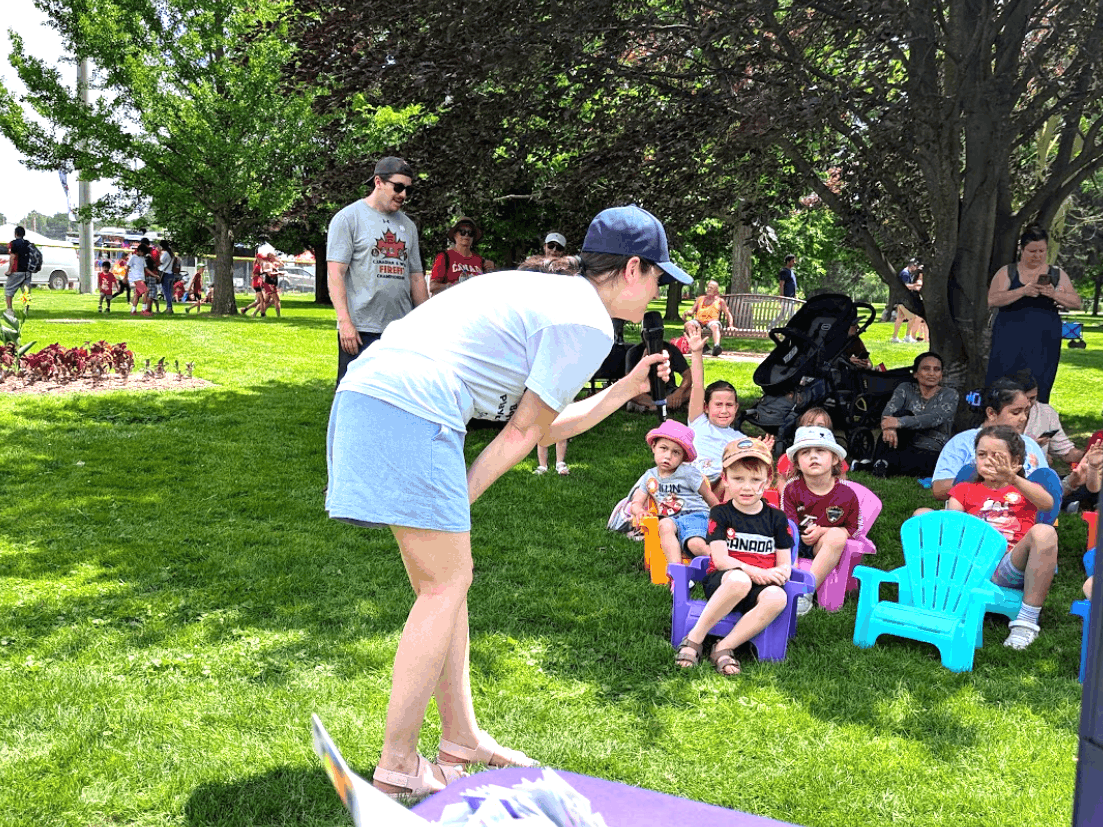
With the speakers up and a single microphone passed from hand to small hand, we did what Mysh does best: we built stories out loud, together, in real time.
If you've never seen it happen, here's the shape of it. We start a story, then we stop and hand the moment to the crowd. What happens next? Who's the hero? What are they afraid of? And instead of the shy silence you might expect from a group of kids in front of a microphone, you get a flood — ideas tumbling over each other, each one bolder than the last. The kids weren't watching a story happen to them. They were writing it.
That's how Canada Tree was born.
One of our storytellers leaned into the mic and introduced a superhero with muscular branch arms who rescues people trapped in mazes. Canada Tree. Invented on the spot, fully formed, gloriously specific — muscular branch arms, mind you, not just any arms — and beloved by everyone within earshot before he'd even had his first adventure. We couldn't have written a better character if we'd tried, which is sort of the whole point. The best ideas were never ours to begin with. They were already out there in the crowd, waiting for a microphone.
Authors, not audience
We shared the afternoon with some stiff competition. An exotic animal show ran nearby. A Spider-Man made an appearance. On paper, a browser-based storytelling game isn't the flashiest act at a summer festival, no reptiles, no web-slinging, no costume.
But something kept the kids at our tree, and we think we know what it was. At most shows, kids are the audience. They watch the animals, they cheer for the superhero, they clap when it's over, and then they move on to the next thing. With Mysh, they're the authors. The story doesn't exist until they build it, and it goes exactly where their imaginations take it — mazes, branch-armed heroes, and all. That shift, from watching to making, is the whole reason Mysh exists, and it's a different kind of magic to witness in person. Quieter than a Spider-Man entrance, maybe. But it sticks.
One more story
You could hear it in the moment we wrapped up. Before we'd even caught our breath, a small voice asked the question every storyteller dreams of hearing:
"Can we play another story?"
That's the line we carried home from Cambridge. Not the heat, not the logistics, not the show next door, just a kid who wasn't ready for the story to end. It's the same feeling we're chasing every time a family opens Mysh at home: one more chapter, one more character, one more and then what happens?
Thank you, Cambridge, for the shade, the ideas, and Canada Tree. We had as much fun as the kids did, and we'll be back.