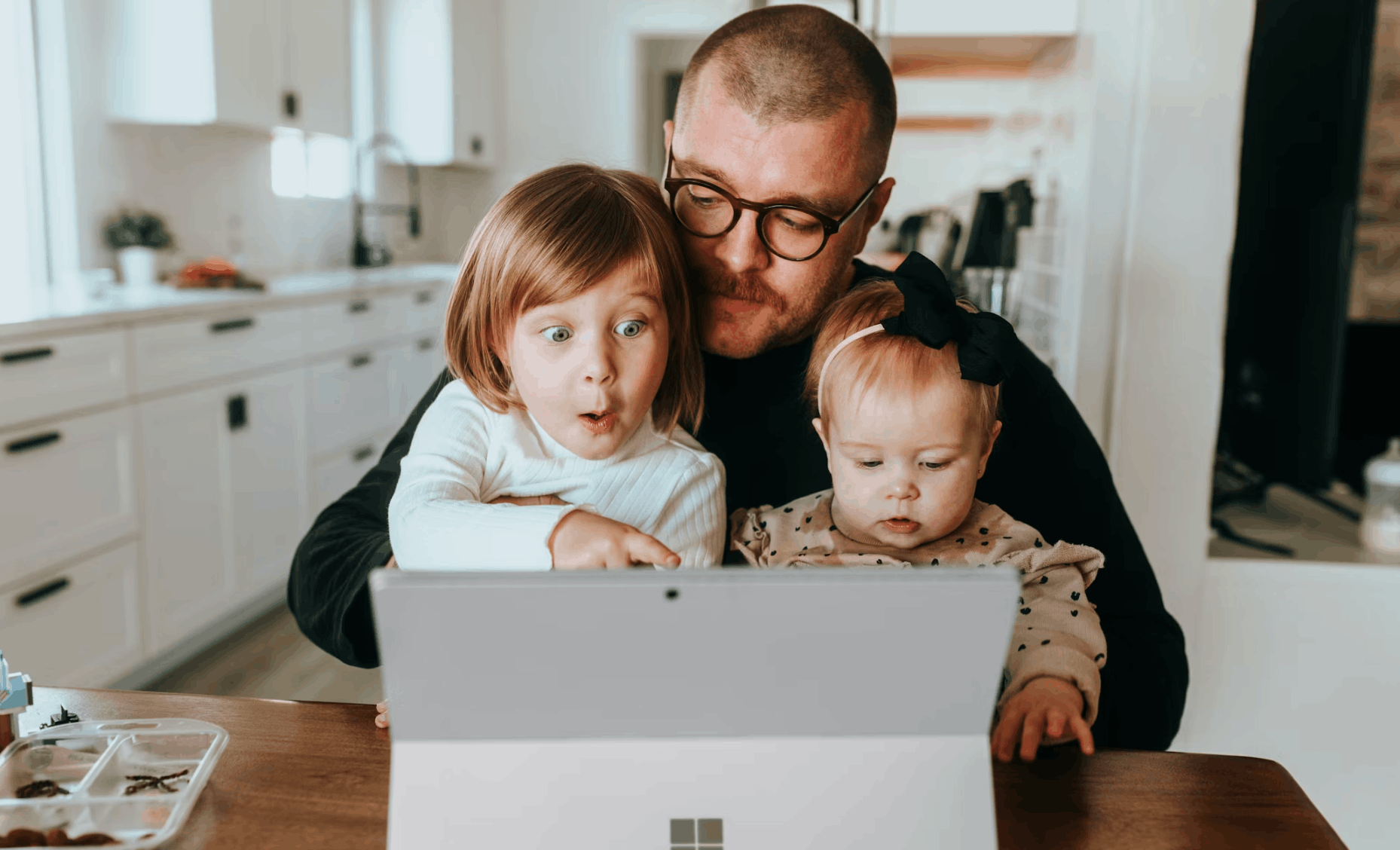
If you have ever handed your kid a tablet so you could make dinner, and then felt a small pang of guilt about it five minutes later, you are not alone. You are, in fact, in the majority.
A new survey of 1,000 U.S. parents found that 84.6 percent of them have felt guilty about their child's screen time at some point. That number has jumped from 74 percent just the year before, which is a 14 percent rise in guilt in a single year.
The numbers behind the guilt
The data comes from Lingokids, a children's education company that has been tracking screen time habits for a decade. Their newest report surveyed parents of kids between 2 and 8 years old, and a few things stood out.
Almost every parent allows some screen time. We are talking 98 percent. Of those, 44 percent allow more than two hours a day. So nearly everyone is doing it, and yet the guilt keeps climbing anyway.
And it is not really about the screens themselves. When researchers asked parents what worried them most, the top concern by a wide margin was the content their kids were seeing, not the number of hours. Nearly half of parents pointed to inappropriate content as the main reason they felt bad, and more than half said they genuinely believe almost anything can end up on a kids' platform these days.
"The problem isn't the screens. It's the content. Parents don't trust that their kids' screen time is quality time." - Dr. Diana Barrett, Clinical Psychiatrist, quoted in the Lingokids 2026 report
This is not just one company's data
It would be easy to read those numbers and assume they are a single survey from a single company with something to sell. So it is worth checking whether other research says the same thing, and it largely does.
A separate study from Reviews.com found that just over half of American parents feel guilty about their kids' screen time, with mothers and fathers reporting it in roughly equal numbers. Researchers there pointed to the same underlying issue: parents are not sure the time their kids spend on screens is actually good time.
Lurie Children's Hospital in Chicago found something similar in their own research, with three in five parents reporting guilt, and the most common reasons being too much time, using screens as a built-in babysitter, and feeling like family time was getting pushed out. Their pediatrician, Dr. Alyssa Cohen, suggested something simple: designate a few screen-free zones or times, like mealtimes, rather than trying to police every minute.
And this guilt is not just a feeling that fades. A peer-reviewed study published in the Journal of Media Psychology followed hundreds of parents over time and found that the guilt itself, not just the screen time, was linked to higher parental stress and a weaker relationship with their kids. In other words, feeling bad about screen time can do more damage than the screen time itself.
So what actually helps
If the guilt is mostly about content rather than time, then the fix is not necessarily fewer screens. It is better screens.
Across the research, a few things kept coming up as genuinely useful, not just nice in theory.
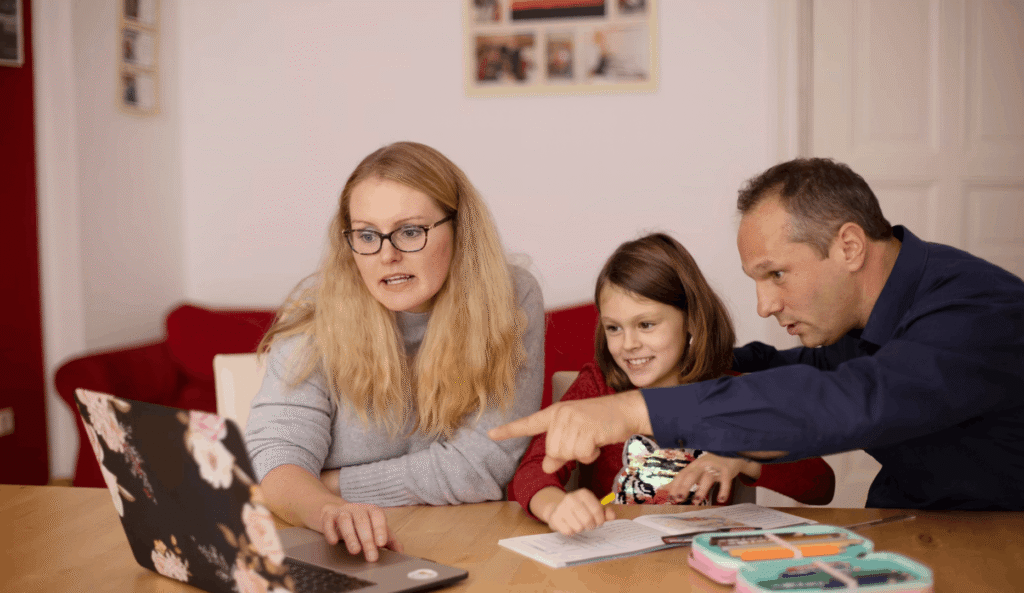
Co-using rather than handing off. The Lingokids report found that two thirds of parents say they bond with their kids over screen time, and that number climbs when a parent is actually present and participating rather than just supervising from a distance. One parent in the survey described using an educational app with her daughter and ending up learning something herself in the process, which is a pretty good sign that the time was not wasted.
Designating specific zones or times. Lurie Children's recommendation of screen-free mealtimes is a small, doable change rather than an all-or-nothing rule, and it tends to actually stick.
Choosing curated over open-ended. Parents in the Lingokids survey said they were far more likely to grant extra screen time on platforms they trusted to be properly curated, places where they were not worried about what might show up next. Open platforms with user-generated content scored much lower on trust across the board.
Letting go of the guilt itself. This is the part the research keeps circling back to. The Journal of Media Psychology study found that the stress from guilt was sometimes worse for the parent-child relationship than the screen time itself. Feeling like a bad parent for handing over a tablet during a chaotic Tuesday evening does not actually make anyone a better parent. It just makes the evening worse.
"Quality time with family helps children thrive. We recommend that families designate screen-free times of day or areas of the home, such as mealtime, to promote uninterrupted connection." - Dr. Alyssa Cohen, pediatrician, Lurie Children's Hospital
Why this matters to us at Mysh
We did not set out to build another thing for parents to feel guilty about. We built Mysh because we wanted screen time to be something a family does together, not something one person allows so the other can get a break.
That does not mean co-play is the only way to use it. Some nights you genuinely need twenty minutes to make dinner, and that is fine. But when you do sit down with your kid, even for ten minutes, we wanted that time to feel like it counted. No ads interrupting the moment. No strangers in the mix. No purchase prompts trying to get your kid to ask you for something. Just a story you are building together.
The data backs up something most parents already feel in their gut: it is not the screen that is the problem. It is whether the time spent on it feels worth it afterward.
Sources cited in this article
Lingokids, Kids Interactive Entertainment Report 2026 (lingokids.com)
Reviews.com, study on U.S. parental screen time guilt (reviews.com)
Lurie Children's Hospital, screen time statistics and pediatrician commentary (luriechildrens.org)
Peer-reviewed study on parental screen guilt and relationship satisfaction, Journal of Media Psychology (tandfonline.com)